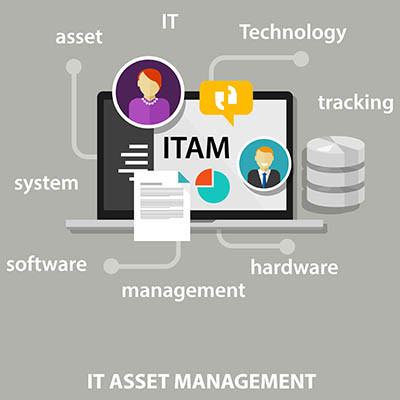
How much control do you really have over your IT assets? Oftentimes, businesses will consider other priorities, like sales, operations, and customer service, before they focus on IT systems and resources. The problem with this is that it creates a significant burden for your business, both in terms of the hidden financial drains and serious security vulnerabilities that undermine your business’ stability.
TS3 Technologies Blog
It’s a symbol that we’ve all become familiar with in recent years: three horizontal lines, representing the menu of whatever application or website is currently in use. Sometimes appearing as three dots, this little icon can be surprisingly important for both the end user and the business using it… especially now that mobile devices are so commonly used for browsing (early this year, 64% of all website traffic was observed to come from these devices).
Here's a horrifying thought: Imagine your beautiful office has 50 hardworking employees... but only one tiny, single-stall bathroom. It's chaos. There's a line down the hall, all day. Productivity grinds to a halt. It's a classic bottleneck, and it’s completely unnecessary.
Here's the hard truth: This is exactly what’s happening to your business’ data right now. You’re paying your ISP for a super-fast Internet connection, but you’re forcing all that crucial business data through a flimsy, $50 consumer-grade router; you’re going to find out it’s not up for the job.
Let me ask you something: how well does your current IT support function?
If your first instinct is to say something vaguely positive, like “good” or “fine,” you’re probably missing out on significant benefits that could come from a more immersive and fleshed-out service delivery, rather than a stopgap meant to preserve the status quo. If your provider has never asked you about the future and your goals for it, it may be time to seek what else is out there.
With the rise of generative AI infiltrating pretty much every sector of society, it’s no wonder that businesses are finding creative new ways to use it for their gain. However, you need to be especially careful when using generative AI in the workplace. Today, we want to cover three common no-no’s that your business should keep in mind as it navigates the wild landscape that is AI.
Network hubs, network switches, network routers… What does it all even mean? All of these devices and terms can be confusing, and to some, they might even be interchangeable. However, the fact remains that they all serve different purposes, and some might not be the right solution for your business’ needs. Today, we want to break down the differences and when you might consider one over the other for your infrastructure.
How does your business use virtualization? We guarantee you that at least part of your infrastructure is virtualized to some degree, even if you don’t realize it. From hardware infrastructure to your desktop infrastructure, there are plenty of options for how your business can leverage virtualization for considerable impact.
It’s easy to skimp here and there when you run a business. After all, it isn’t cheap, and you have to make difficult decisions every day for where you’re prioritizing your spending. One area where you can’t scrimp on a substandard investment is your technology; especially an old computer that has broken down over and over again. If you’re not careful, that broken computer could be holding you back and costing you profit.
If you want your devices to keep running smoothly, including utility and security, you need to ensure they are updated. Updates sometimes cause problems beyond what they solve, however. What looks like a routine patch or update could impact your important applications, and if you’re not careful, you could potentially cause a downtime scenario simply by being proactive with your updates.
Does your business really still use that old fax machine? Chances are, it’s just taking up space and costing your business valuable time, money, and resources that would be better spent elsewhere. Let’s look at how a fax machine can actively hold your business back, both in terms of operations and budget.
No one likes the feeling of being plugged into work all the time. Not even the most diligent employees will appreciate receiving an email after hours. Yet despite this feeling, there’s an unspoken expectation that you are always on, so to speak, especially with the advent of mobile technology and remote work. How can you prevent these issues from escalating into burnout?
Synergy. Paradigm shift. Disruption. There are so many buzzwords saturating modern business jargon nowadays, including and especially “digital transformation.”
Unfortunately, “digital transformation” sounds big and, worse, expensive… especially for our small and medium-sized business neighbors. We wanted to step in and assure you that this is not the case and that any business can benefit from it, provided it is approached correctly and mindfully.
It feels good to use tools you’re familiar with, but there comes a time when old tools start to hold you back. You might start to see unexpected costs that only surface over time. Let’s take a look at how you can know when it’s time to update your business’ tech and some of the hidden costs associated with not updating it.
Is your business data hard to get to, like it's locked away and only a few people have the key? That can really hold your business back. Imagine if everyone on your team could easily use all the data you create and collect to make better decisions, faster. That's what data democratization is all about, and it’s a powerful tool. In today’s blog we briefly discuss how it works.
Remember the days of watching a loading bar slowly crawl across the screen? Or maybe that distinct screech of a dial-up modem connecting? While technology has rocketed forward since then, some businesses still cling to an outdated approach when it comes to managing their IT: the break-fix method.
This means waiting for something to go wrong—a server crash, a software glitch, a security breach—before calling for help. It might seem cost-effective initially, but this reactive stance is becoming increasingly risky and wasteful.
You might remember the good old days of software, and by “good old days,” we mean “good old days of tedium, installing software on computers one by one.”
Software as a Service, or SaaS for short, has put an end to those days and has made way for better options for SMBs. Today, we want to look into these subscription-based tools and showcase their benefits.